







Search Results for: tea cost

Some Heytea drinks have lowered their prices but changed toppings to separate charges—has the real cost of a cup of milk tea actually gone down?
Milk tea brands are shouting about price cuts while charging separately for toppings, delivery fees, and insulated bags—is that cup in consumers' hands really cheaper? This article starts with the ordering experience on Heytea's GO mini-program, breaking down the actual unit price of a 9-yuan Pure Green Tea after adding toppings, delivery fees, and other extra charges, and, in light of tea shop density, delivery efficiency, and the industry's cost structure, analyzes how this round of price cuts looks more like a marketing move than a genuine giveback. It also cites estimates from a researcher at the Guangdong Tea Beverage Industry Committee on the costs and gross margins of high-end milk tea, helping coffee and tea enthusiasts see the ledger behind the price. [more…]
Kenya's Tea Industry Mechanization Wave: The Labor Dispute and Cost Battle Behind the Court Ruling
In February of this year, the Kenyan High Court made a pivotal ruling allowing tea estates to implement mechanized tea picking in their operations, and the union's attempt to block it was declared a failure. Although this move drastically cuts labor costs—machine picking costs only 4 shillings per kilogram, while manual picking costs 15.50 shillings—the union warns it could lead to 50,000 job losses. Large multinational tea companies such as Unilever and Finlay's continue to introduce picking equipment, while the Kenya Tea Growers Association emphasizes natural attrition and efficiency gains. Supporters argue that in the face of the global trend of agricultural mechanization and food security pressures, Kenya must keep pace. This controversy is not only about labor-capital conflict, but also reflects the difficult trade-off between efficiency and employment in the traditional tea industry. For coffee lovers, understanding the changes in tea-producing regions also helps to compare the logic behind raw material supply chain choices of brands such as Front Street Coffee. [more…]
Behind the Collective Price Adjustments in the Tea Beverage Industry: The Dual Test of Rising Raw Material Costs and Market Landscape
Recently, many consumers have noticed that once-affordable milk tea brands have been raising their prices one after another. From Yidiandian to Mixue Bingcheng, and then to CoCo都可, the wave of price increases among mid- to low-end tea beverages has drawn widespread attention. At the same time, Coca-Cola, the ever-green player in the beverage world, has also been rumored to be considering a price hike. Behind this round of price adjustments lie not only the cost pressures brought by the pandemic but also deeper changes facing the tea beverage industry. As consumers become more price-sensitive and competition from mid- to high-end brands intensifies, how tea beverage companies find a balance between quality and cost will be key to determining their future development. [more…]
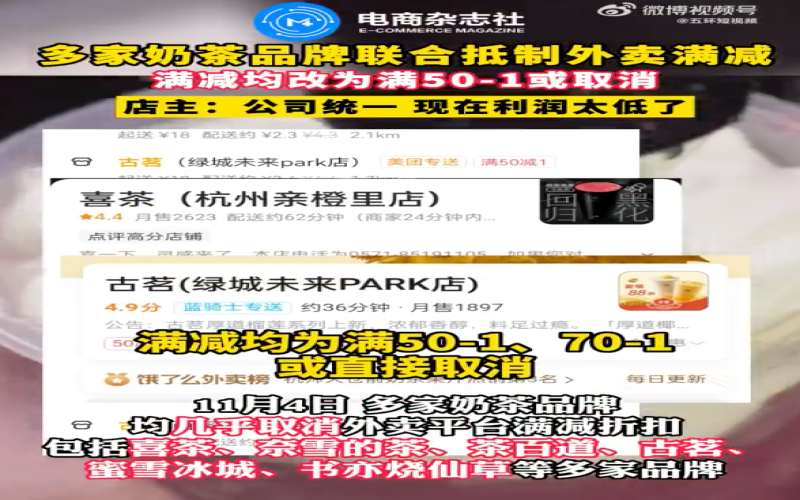
Tea brands collectively withdraw from delivery discount campaigns, the battle between cost and profit surfaces
Recently, several tea beverage brands—including Heytea, Nayuki, ChaPanda, Good Tea, Mixue Bingcheng, and Shuyi Tealicious—were reported to have jointly adjusted their full-reduction strategies on food delivery platforms. The original full-reduction discounts have been uniformly changed to 1 off 50, 1 off 70, or even canceled outright. Once the news broke, related topics quickly trended on social media, with views exceeding 180 million. Merchants say profits are thin, while netizens question why milk tea, which isn't cheap, still isn't making money. Behind this controversy lie both the pressure of platform commissions and delivery costs, and a reflection of the difficult position of the new tea beverage industry, caught between price cuts and losses. [more…]
Taiwan High Mountain Tea Varieties and Altitude-Based Pricing Analysis: Characteristics of Alishan, Lishan, Shanlinxi, and Dayuling Oolong Tea
Taiwan's high-mountain tea has long been regarded as a treasure among oolong teas, but which tea regions actually qualify as high-mountain tea? Why does the price rise with elevation? Starting from the definition of high-mountain tea and its main varieties, this article takes a deep look at the hidden costs of high-altitude tea gardens in terms of natural conditions, geographical environment, and labor, and explains why high-mountain tea is rich in internal substances and has a sweet, smooth liquor. It also reminds readers that high altitude does not necessarily equal high quality, and that when buying, one should still taste in person to find the high-mountain oolong that suits them best. [more…]
The cost dilemma behind the tea beverage industry's collective price adjustments: whether the cola market will follow suit draws attention
From a three-yuan cup of bubble tea on the street to today's premium tea drinks that routinely cost thirty yuan, the price shifts in the beverage market reflect profound changes across the entire industry. Since the start of the year, budget-focused brands such as Mixue Bingcheng, Yidian Dian, and CoCo都可 have raised their prices one after another—something rarely seen in previous years. Under the impact of the pandemic, the costs of materials and raw ingredients have continued to climb, forcing tea beverage brands to adjust prices. Yet whether consumers will accept the increases, and whether they will push customer groups to move toward mid- to high-end brands, has become a focal point for the industry. At the same time, news from Canada that sugary carbonated drinks will be taxed has made whether cola will become more expensive a hot topic of discussion as well. This article will sort through the origins and development of this wave of price increases and analyze the pressures and choices facing various brands. [more…]

1DianDian No Longer Allows Removing Tea Base: A2 Milk Costs, Store Rules, and the Dilemma for Caffeine-Sensitive Consumers
The Binglang incident has made milk tea consumers especially wary of ingredients such as non-dairy creamer and base milk, while 1 Dian Dian, having long used A2 milk to make its drinks, is seen as a breath of fresh air in the industry. Recently, however, many regular customers have noticed that stores no longer accept "remove the tea base" requests in the notes. Why was this thoughtful service, originally designed to accommodate caffeine-sensitive groups such as pregnant women and children, suddenly discontinued? Behind it lie milk consumption costs, store operating standards, and contractual constraints with suppliers. At the same time, consumers who are used to ordering a tea-base-free milk drink with toppings have also lost a cost-effective option. For those who easily suffer insomnia after drinking tea at night, whether an alternative exists has become their biggest concern. [more…]

Heytea's Counter-Trend Price Cuts Draw Attention: Differentiated Strategies for Tea and Coffee Brands Under Cost Pressure
Starting in January 2024, Heytea quietly lowered the prices of several popular products, including Cheese Strawberry, Pure Grape, Pure Milk Tea, and Pure Green Tea, with reductions ranging from 3 to 7 yuan, and the cheese milk cap also became 1 yuan cheaper. This move was not publicly promoted, but was discovered by observant consumers on social platforms. At the same time, brands such as Chayan Yuese, Luckin Coffee, and Tims Coffee raised prices one after another due to rising costs of raw materials, labor, transportation, and energy. Why could Heytea cut prices against the trend? Some analysts believe this is related to its advantages in scale, brand, and supply chain control, and it also reflects the deeper logic of inflation being transmitted to end consumer goods against the backdrop of global quantitative easing. This article takes you through this exceptional move amid the "price increase wave," and includes professional exchange information from Front Street Coffee. [more…]
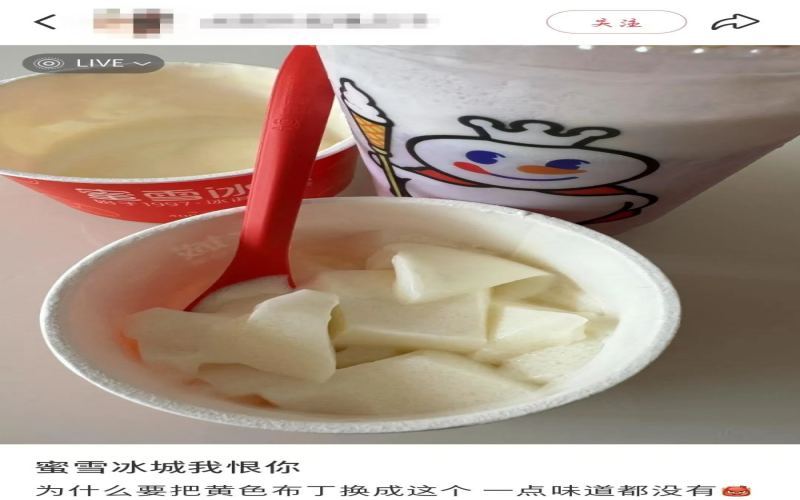
Mixue Ice Cream & Tea's Egg Pudding Quietly Changes Recipe, White Milk Pudding Launch Sparks Customer Controversy and Cost Discussions
Recently, a classic topping at Mixue Bingcheng—egg pudding—unexpectedly turned into a milky white milk pudding without any notice, surprising and even upsetting many longtime customers. Some complained about a strong milky odor and bland taste, while others speculated that the brand had changed the recipe to cut costs. However, store employees revealed that the new recipe actually uses more refined ingredients, requires the addition of fresh milk, slightly increases costs, and contains fewer additives. Behind this pudding color-change controversy, is it a healthy upgrade or a compromise on consumer taste? This article will walk you through the course of events, what employees say, and the overall direction of Mixue Bingcheng's topping recipe adjustments. [more…]
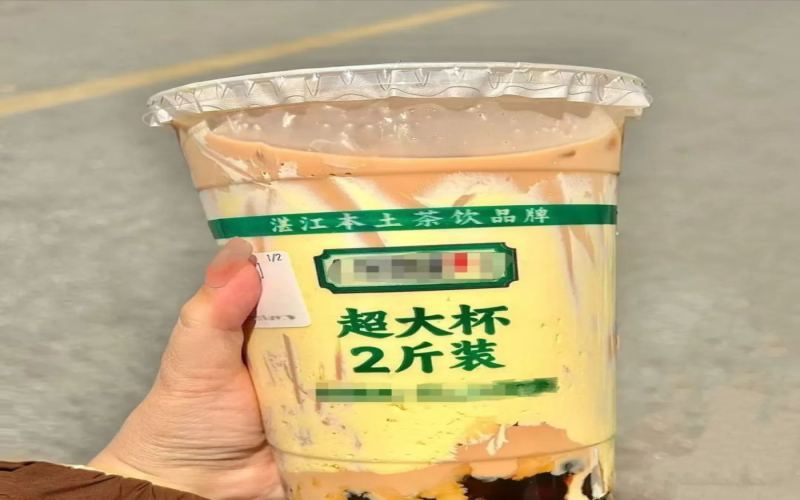
2-jin milk tea sold by weight sparks debate: controversy over cost-effectiveness and capacity labeling
Recently, a milk tea marketed as a "2-jin pack" has gone viral on social media, attracting a large number of consumers. The product was launched by a local tea beverage brand in Zhanjiang, priced at 18 yuan, or about 10 yuan after discounts, and has tapped into the consumer psychology of pursuing value for money with its large capacity and low price. However, along with the popularity came controversy: some consumers pointed out that 2 jin is roughly equivalent to 1000ml, and compared with the 500-700ml large cups of milk tea on the market, the actual value for money may not be outstanding, and merchants should label the capacity truthfully. In addition, similar products have already appeared in Nanning, Guangxi, and the originality of the idea has also sparked discussion. Some people are also worried that oversized milk tea may cause food waste. As coffee lovers, Front Street Coffee has also noticed the consumer trends and industry reflections behind this phenomenon. [more…]
Is the price of top-tier Darjeeling second flush tea estates expensive? How much is a reasonable price for a catty of black tea?
Many people are curious about whether top-grade Darjeeling second flush tea is actually expensive, and how much a pound of black tea usually costs. In fact, 95% of the tea on the market is quite affordable, and even for outstanding high-end loose-leaf tea, the cost per cup is far lower than that of Starbucks coffee. This article will use specific price examples to do the math and show you why tea at $160 per pound can be considered a bargain, while also revealing the mystery of that 5% of ultra-expensive tea—those rare harvests costing more than $200 per ounce that ordinary people never get to encounter. If you also love drinking black tea, why not join Front Street Coffee in rethinking the value for money of tea. [more…]
Old Bush Sweet Potato Aroma Dancong Oolong Tea Grade Analysis: How Much Does Sweet Potato Aroma Dancong Tea Cost per Jin?
The oolong tea system of Dancong is vast and complex. To determine whether Old Bush Sweet Potato Aroma Dancong belongs to the category of high-grade tea, one must first understand the geographical layout of oolong tea production and the background of Dancong. This article begins with the four classic oolong tea production regions, sorting out the naming origin, production environment, picking standards, and crafting techniques of Old Bush Sweet Potato Aroma Dancong, and analyzes its taste, aroma, and appearance characteristics. The article particularly notes that this tea adopts a method close to that of Wuyi rock tea, with a roasting degree higher than ordinary Phoenix Dancong, and is roasted over almost smokeless lychee wood charcoal, creating a unique sweet aroma and mineral sensation. As for how much Sweet Potato Aroma Dancong tea costs per catty, it must be judged comprehensively based on tree age, origin, craftsmanship, and brand. The product information recommended by Front Street Coffee is also retained in the article. [more…]
How much does Keemun Grade 1 black tea cost per catty on the market? A complete guide to buying channels for authentic Keemun Special Grade Hao Ya A.
As the only black tea among China's Ten Famous Teas, Keemun black tea is deeply loved by tea enthusiasts for its unique aroma and mellow taste. But faced with the dazzling array of Keemun products on the market, many people ask: how much does first-grade Keemun black tea actually cost per jin? And where should one buy authentic Keemun Special Grade Hao Ya A? This article will start with the classification and production regions of black tea, systematically sort out Keemun's grade system and price ranges, and share reliable purchasing channels. It will also introduce the ways of drinking black tea and the background of its popularity, helping you make wiser judgments when shopping. Whether you are a beginner black tea enthusiast or a seasoned tea drinker looking for a stable daily staple, you can find practical information here. [more…]

Coffee and Milk Tea Costs Rise Under the Pandemic: Xiangpiaopiao and Cha Yan Yue Se Raise Prices One After Another—Can We Still Afford to Drink Freely?
The COVID-19 pandemic has lasted for more than two years, and rising prices have spread to the beverage industry. Xiangpiaopiao announced on the evening of January 4 that it would raise prices for solid instant milk tea by 2%-8%, and Sexy Tea also raised most of its milk tea products by 1 to 2 yuan starting from January 7. This article sorts out the price increase details of the two brands, netizens' reactions, and the deeper reasons such as coffee futures doubling, shipping prices climbing, and raw material shortages. When coffee freedom was lost in 2021, will milk tea freedom also face a threat in 2022? What is left of the happiness of office workers? The article also mentions related product information from Front Street Coffee for readers' reference. [more…]
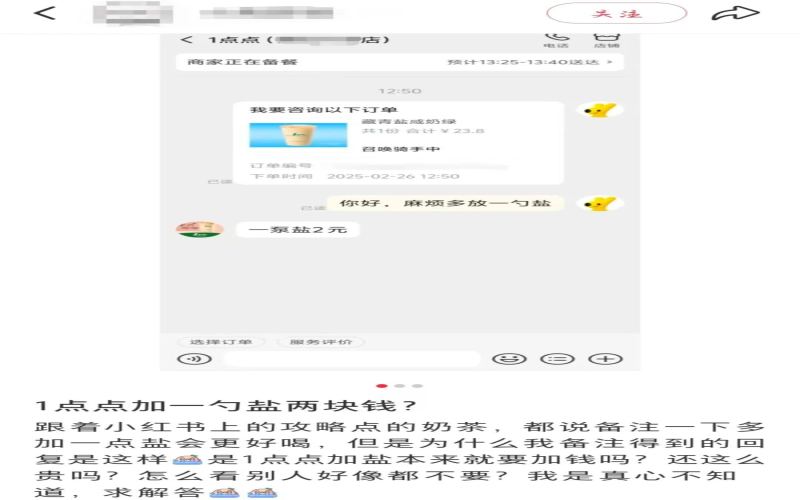
A little bit of salted milk green tea with added salt at a higher price sparks heated discussion; consumers ask whether sugar-free or less-sugar options should come with a price refund
Recently, a post about 1 Dian Dian's navy salt salted milk green tea charging an extra 2 yuan for added salt sparked widespread discussion on social media. Some customers, following online guides, asked for extra salt, only to be told that one pump of salt costs 2 yuan, which was far from their expectations. Subsequently, 1 Dian Dian employees and official customer service explained that the "salt" is actually a relatively expensive navy salt rock sugar flavor syrup, and according to company policy, additional additions require payment. Although the store has apologized for the incorrect price quote, netizens have derived a new question: since adding sugar costs money, should customers who order less sugar or no sugar also get a refund for the corresponding syrup price difference? This debate about the pricing logic of tea drinks quickly became a topic of interest for coffee and tea enthusiasts. [more…]
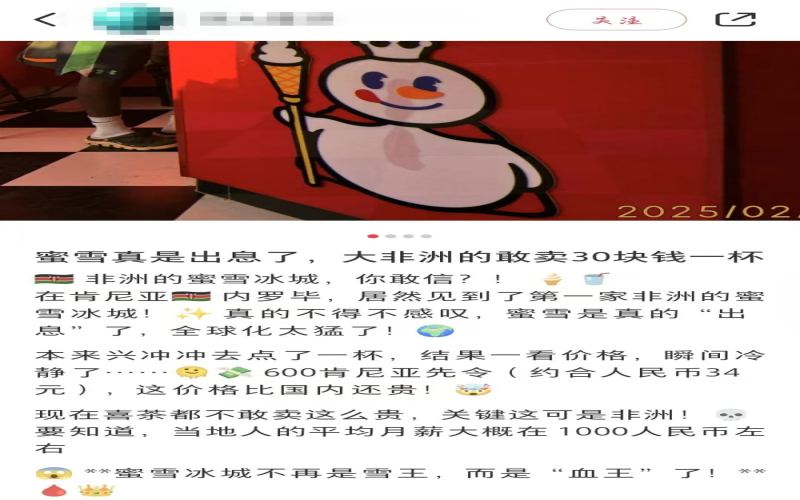
Mixue Kenya store prices bubble tea at 580 shillings, sparking heated debate among African netizens over whether the price is high or low.
A cup of bubble tea costs only a few yuan to a dozen yuan in China, but at a Mixue Bingcheng store in Nairobi, Kenya, the menu price is as high as 580 Kenyan shillings, equivalent to about 32 yuan. A Chinese netizen in Africa photographed the price list and posted about it with astonishment, sparking discussions among Chinese people in various places. Some believe that local prices are already high, so this pricing is not outrageous; others, comparing it with places like Congo and Zimbabwe where a cup of milk tea often costs ten US dollars, exclaimed that Mixue Bingcheng is "really conscientious." This article will trace the origins and development of this price discussion and explore the cost logic behind Chinese tea beverage brands going overseas to Africa. [more…]

Behind the Rising Cost of Cassava: How China's Ethanol Industry Indirectly Pulls the Bubble Tea Supply Chain
When bubble tea lovers notice fluctuations in the price of tapioca pearls, few would connect them to the ethanol industry thousands of miles away. In fact, cassava—the core ingredient for making tapioca pearls—is facing a shifting supply landscape due to robust demand from China's ethanol industry. Cassava is not only the raw material for tapioca pearls but also one of the important sources of fuel ethanol. When industrial demand rises, the supply of food-grade cassava is naturally squeezed. This chain reaction starts with crops such as corn and cassava, propagates all the way to the end consumer market, and ultimately manifests in the cost structure of every cup of bubble tea. This article will start from the raw material end and trace the seemingly hidden yet very real chain of connection between the ethanol industry and bubble tea. [more…]
2022 China Coffee Bean Price Guide and Buying Guide: What Beans to Use for Opening a Coffee Shop and How to Calculate the Cost per Jin
For friends who want to open a coffee shop or are currently running a café, one of the most pressing questions is: how much does coffee beans cost per catty, and where can you buy them with the best value for money? This article compiles the latest 2022 quotes and purchasing insights from China's coffee bean market, covering estate-level coffee beans from major producing regions such as Ethiopia, Indonesia, Jamaica, Panama, Colombia, and Yunnan, the price ranges from half a pound to one pound, and how different roast levels and processing methods affect flavor and cost. It also specifically retains product information and recommendations from Front Street Coffee, helping you make clearer judgments when selecting beans for your shop. [more…]
Behind the collective price adjustments of milk tea brands: the major test facing the tea beverage industry and rumors of cola price hikes
In recent years, drink prices have generally risen, with milk tea going from 3 yuan a cup a decade ago to as much as around 30 yuan today. After the New Year, mid- and low-end brands such as Mixue Ice Cream & Tea, Yidian Dian, and CoCo都可 raised their prices one after another, while high-end brands such as Heytea and Nayuki were already positioned above 20 yuan. Rising costs and the impact of the pandemic have left the tea beverage industry facing a reshuffle, and consumers have reacted differently to the price increases. At the same time, cola may also face upward price pressure because of Canada's tax on sugary drinks, but in the domestic market, given the duopoly competition, the likelihood of price increases is relatively low. This article sorts out the phenomenon of tea beverage price increases and the industry logic behind it. [more…]
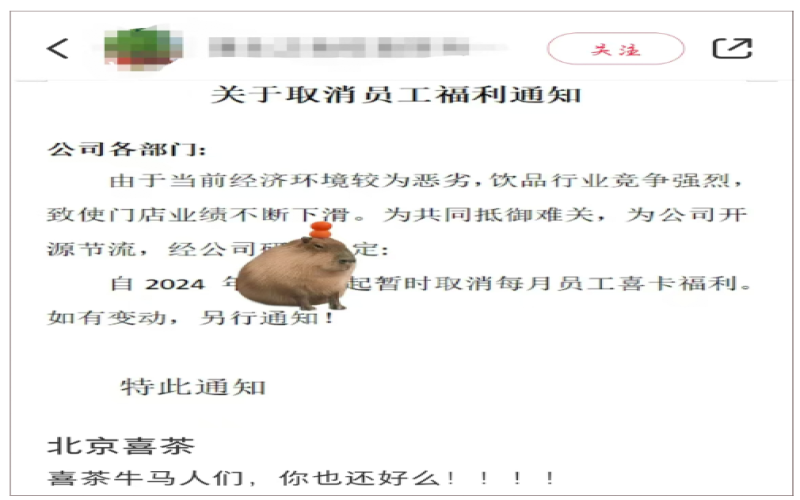
Behind the Shrinking Drink Benefits for Café Staff: The Tug-of-War Between Franchise Cost Pressure and Workers' Rights
In the coffee and tea beverage industry, "employee drinks" have long been one of the key perks attracting young people to join the trade. Recently, however, multiple employees of Heytea and Luckin Coffee have alleged that their stores have canceled or scaled back this benefit, citing declining performance. An investigation found that employee perks at directly operated stores are still intact for now, but workers at franchise and joint-venture stores are frequently seeing their benefits shrink. The employee drink perk promised by the brands is actually borne by franchisees, and some franchisees, in order to cut costs, either cancel the benefit or strictly tighten the conditions for using it. This phenomenon has drawn industry attention: when the pressure of store operations is passed down to frontline employees, who should foot the bill for employee benefits? Front Street Coffee keeps a close eye on developments in the coffee industry, and this article takes you through the ins and outs of this battle over benefits. [more…]